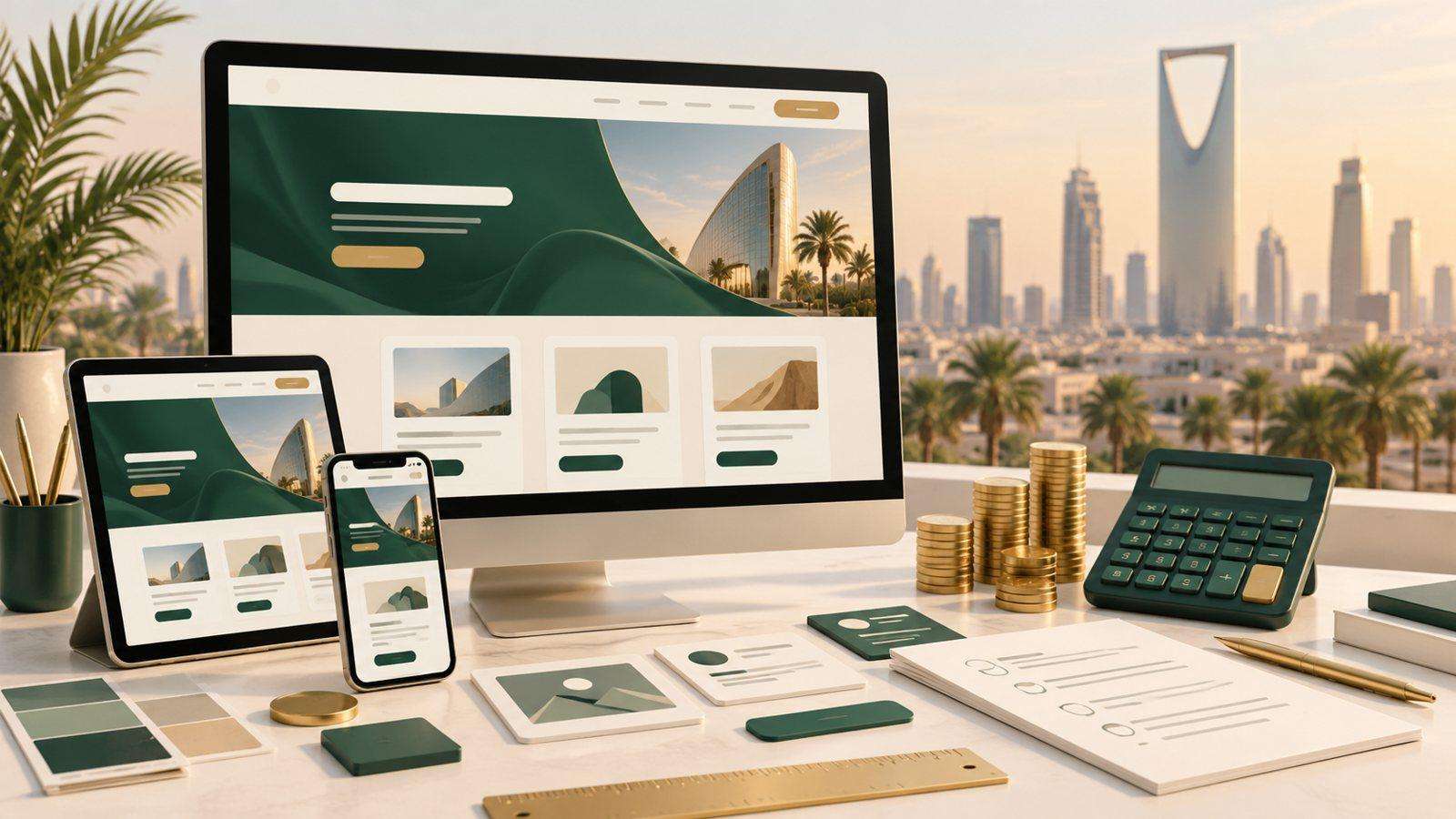
A custom website is designed and built around your business: your brand, your customers and the way you sell. A template site starts from someone else’s layout and adjusts it. This guide explains when custom website design is worth paying for, what you get for the money, and when a template is enough.
What Custom Website Design Means
With a custom design, the structure, pages and features are planned first, then designed and coded for that plan. Nothing is there because a theme included it. The result is a site that matches your brand, loads only what it needs and can grow with new features later.
Custom Website Design vs Templates and Website Builders
- Brand: a custom site is designed for your identity; a template is shared with many other businesses.
- Speed: custom code loads only what your pages use; templates often carry features you never switch on.
- Arabic and English: a custom site is planned for right-to-left and left-to-right from the start; many templates handle Arabic poorly.
- Features: custom sites can connect to your booking, payment, CRM or ERP systems; builders limit you to their own add-ons.
- Cost and time: a template or a website builder is cheaper and faster to launch; custom design costs more at the start.
When a Template Is Enough
If you need a simple site quickly, have a small budget and do not need special features, a good template is a sensible choice. Custom design pays off when the website is a main source of enquiries or sales, when your brand needs to stand apart, or when the site has to work with other systems.
The Business Benefits of a Custom Website
A site that looks like your brand. Colours, type, photography and tone are chosen for your audience, so the website feels like the rest of your business.
Better search visibility. Clean page structure, fast loading and correct Arabic and English versions give your pages a stronger base for SEO than a heavy theme.
Pages built to convert. Each page is planned around one action, such as a call, a booking or a quote request, with the content a customer needs before taking it.
Room to grow. Online payments, customer accounts, dashboards and integrations can be added later without rebuilding the whole site.
How the Custom Web Design Process Works
A typical project moves through five stages: discovery, where goals, audience and pages are agreed; design, where layouts are approved before any code is written; development; testing on real devices in both languages; and launch with support afterwards. At Whetstonez, clients see progress in weekly demos, so there are no surprises at the end.
What Does a Custom Website Cost?
Cost depends on the number of pages, the features and the integrations. Our website cost guide for Saudi Arabia gives price ranges by type of site and explains what moves the price up or down.
Why Choose Whetstonez as a Custom Website Design Company
Whetstonez has built websites and web applications from Jeddah since 2012. Design, development and testing are done by our own team, in Arabic and English, and you own the code when the project is finished. See our website design and development services for details.
Custom Website Design FAQs
How long does a custom website take? It depends on the scope. After discovery we give you a timeline with dates for design, development and launch.
Can I update the site myself? Yes. We set up a content management system so your team can edit pages, add articles and change images without a developer.
Will it work in Arabic and English? Yes. Both languages are designed and tested from the start, including right-to-left layouts.
Do I own the website? Yes. The design, code and content are handed over to you.
Planning a custom website?
Whetstonez designs and builds bilingual Arabic and English websites for businesses across Saudi Arabia. See our website development services, our UI/UX design approach and real case studies, or read how to choose a web design company in Jeddah.